

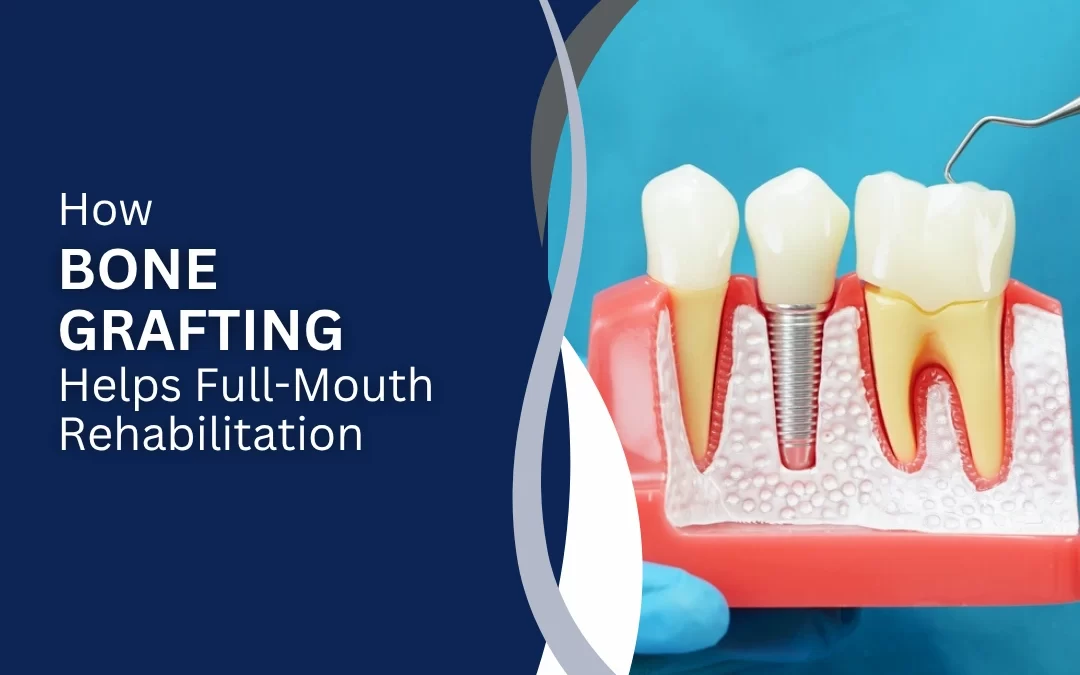
For patients pursuing full mouth dental implants, bone volume is a foundational clinical requirement. Dental implants are titanium fixtures anchored directly into the jawbone, and their long-term success depends on the availability of adequate bone at each placement site. When that bone has been lost, due to tooth absence, periodontal disease, or prolonged denture use, implant treatment is not possible without prior intervention.
Bone grafting is that intervention. It is a clinically proven procedure that rebuilds lost jaw bone, restores the structural foundation of the alveolar ridge, and creates the conditions under which implants can be placed predictably and safely.
At Dental Creations, a specialist dental clinic in Matunga, Mumbai, bone grafting is a routine component of the full mouth rehabilitation pathways offered by Dr. Amol Pradhan and the clinical team. This article explains what bone grafting involves, when it is required, and how it integrates into a comprehensive rehabilitation plan.
Why Bone Loss Occurs and Why It Matters
The jawbone is maintained by the mechanical stimulation generated by tooth roots during function. When teeth are lost, this stimulus ceases and the bone begins to resorb. Research indicates that patients may lose up to 25 percent of alveolar bone width within the first year following extraction, with continued deterioration over subsequent years.
Bone loss is further accelerated by:
- Chronic periodontal disease — sustained infection that destroys the bone supporting the teeth
- Extended denture use — removable prostheses provide no root stimulation, permitting continued bone resorption beneath the appliance
- Untreated dental infections — periapical and periodontal infections cause localised bone destruction
- Facial trauma — direct injury resulting in bone loss at the site of impact
From a clinical standpoint, insufficient bone creates specific implant risks: inadequate height may place fixtures in proximity to vital anatomical structures, and insufficient width may compromise primary stability and osseointegration. Bone grafting addresses each of these deficiencies before implant placement is attempted.
What Is Bone Grafting?
Bone grafting is a surgical procedure in which bone substitute material is introduced into a site of bone deficiency. The graft material functions as a biological scaffold, supporting the ingrowth of the patient’s own bone-forming cells. Over the healing period, these cells replace and integrate with the graft, producing new, viable bone tissue.
Graft materials are selected based on the volume of augmentation required, the patient’s medical history, and the specific anatomical requirements of the site. Categories include autograft (the patient’s own bone), allograft (processed donated human bone), xenograft (bovine-derived bone substitute), and alloplast (synthetic calcium phosphate materials). Each carries distinct biological properties and clinical indications, and the choice is guided by thorough pre-operative assessment including 3D CBCT imaging.
Dr. Amol Pradhan notes:
“The selection of graft material must be individualised. No single material is universally superior. Clinical judgement supported by three-dimensional imaging guides every decision we make at this stage.”
Types of Bone Grafting Procedures
Socket Preservation Grafting
Performed at the time of tooth extraction, socket preservation grafting places bone substitute material into the residual socket to maintain ridge dimensions and minimise post-extraction resorption. In full mouth cases involving multiple extractions, this procedure reduces the extent of subsequent augmentation required.
Ridge Augmentation
Where bone resorption has produced a deficient alveolar ridge, augmentation rebuilds the necessary width or height. Graft material is placed over the deficient bone and secured with a barrier membrane using Guided Bone Regeneration (GBR) principles, providing a protected environment for new bone formation.
Sinus Lift
The posterior upper jaw frequently presents with reduced bone height due to maxillary sinus pneumatisation following tooth loss. A sinus lift elevates the sinus membrane and introduces graft material into the subantral space, building the bone height necessary for implant placement in this region. It is one of the most commonly required procedures in upper jaw rehabilitation.
Guided Bone Regeneration (GBR)
GBR is a technique applied across multiple grafting scenarios. Barrier membranes — resorbable or non-resorbable- are placed over graft sites to prevent soft tissue ingrowth and maintain the regenerative space, ensuring that osteogenic cells populate the site undisturbed.
Not sure if you require bone grafting before implants?
A 3D CBCT assessment at Dental Creations provides a precise evaluation and a clear treatment pathway.
How Bone Grafting Integrates Into Full Mouth Rehabilitation
Full mouth rehabilitation is a staged, multi-disciplinary treatment process. Bone grafting occupies the preparatory phase, preceding implant placement and prosthetic delivery. The general sequence is as follows:
- Comprehensive diagnostic assessment, including 3D CBCT imaging and full clinical evaluation
- Detailed treatment planning covering extractions, grafting, implant positioning, and prosthetic design
-
Tooth extractions with socket preservation grafts where indicated; in some cases, implants can be placed immediately after extraction (in the same sitting), which helps preserve bone and reduce bone loss
- Bone augmentation procedures at sites of identified deficiency
- Healing and graft integration period, typically 3 to 9 months, with interim prosthetics provided
- Implant placement once integration is confirmed through repeat imaging
- Osseointegration period followed by final prosthetic restoration
Interim prosthetic solutions are incorporated into every full mouth rehabilitation plan, ensuring that patients are not without functional teeth at any stage of treatment.
Speak to a specialist at Dental Creations about your full mouth rehabilitation options.
Why Choose Dental Creations in Matunga
Bone grafting outcomes are directly dependent on the quality of pre-operative planning, surgical execution, and post-operative monitoring. At Dental Creations, every grafting case begins with 3D CBCT imaging, enabling precise volumetric assessment and risk-free surgical planning before any procedure is performed.
Dr. Amol Pradhan has extensive experience managing complex bone grafting and full mouth rehabilitation cases, including sinus lifts, ridge augmentations, and simultaneous grafting with implant placement. His approach prioritises thorough assessment and long-term outcome over expedience.
All stages of full mouth rehabilitation at our dental clinic in Matunga, from diagnostic imaging and grafting through to implant surgery and final prosthetic delivery, are managed in-house by a single cohesive team. This ensures consistency of care, clear clinical communication, and a unified treatment plan from the first consultation to the final restoration.
Patients travelling from outside Mumbai or internationally receive pre-visit consultation support, streamlined scheduling, and comprehensive post-treatment documentation, including remote follow-up access throughout the healing period.
Conclusion
Bone loss following tooth loss is a predictable and progressive clinical phenomenon. Left unaddressed, it limits or entirely eliminates the option of dental implant treatment. Bone grafting restores the structural foundation required for implant placement, transforming cases that would otherwise be unmanageable into achievable, well-defined rehabilitation pathways.
Patients who have been advised that implants are not possible due to insufficient bone should seek a thorough assessment from an experienced implantologist. In most cases, bone grafting presents a clear and predictable solution.
Dental Creations in Matunga, Mumbai, is equipped to provide that assessment and to guide patients through every stage of the bone grafting and full mouth rehabilitation process, with the clinical precision and patient care that the complexity of this treatment demands.
FAQ
Is bone grafting always required before dental implants?
Not in all cases. Bone grafting is indicated only when a clinical and radiographic assessment — including 3D CBCT imaging — identifies insufficient bone volume at the intended implant site. Many patients proceed directly to implant placement without any prior augmentation.
How long does the healing period take after bone grafting?
The integration period varies based on the extent of augmentation. Minor socket preservation grafts typically allow implant placement within three months. Larger procedures, such as bilateral sinus lifts or significant ridge augmentation, may require six to nine months before the site is ready for implant surgery.
Will I have temporary teeth during the grafting and healing period?
Yes. Interim prosthetic solutions — removable or provisional fixed, depending on the clinical situation — are incorporated into every full mouth rehabilitation plan at Dental Creations. Patients are not without functional teeth at any stage of treatment.
Is bone grafting painful?
The procedure is performed under local anaesthesia; patients do not experience pain during surgery. Post-operative discomfort is generally comparable to that following a surgical tooth extraction and is well managed with prescribed analgesics over the first few days.
References
Araújo MG, Lindhe J. Dimensional ridge alterations following tooth extraction. Journal of Clinical Periodontology. 2005.
Jensen SS, Terheyden H. Bone augmentation procedures in localised defects in the alveolar ridge. International Journal of Oral and Maxillofacial Implants. 2009.
Dental Creations — Bone Grafting, Matunga: https://dentalcreations.in/bone-grafting-in-matunga-mumbai/
Dental Creations — Full Mouth Rehabilitation: https://dentalcreations.in/full-mouth-rehabilitation/
