

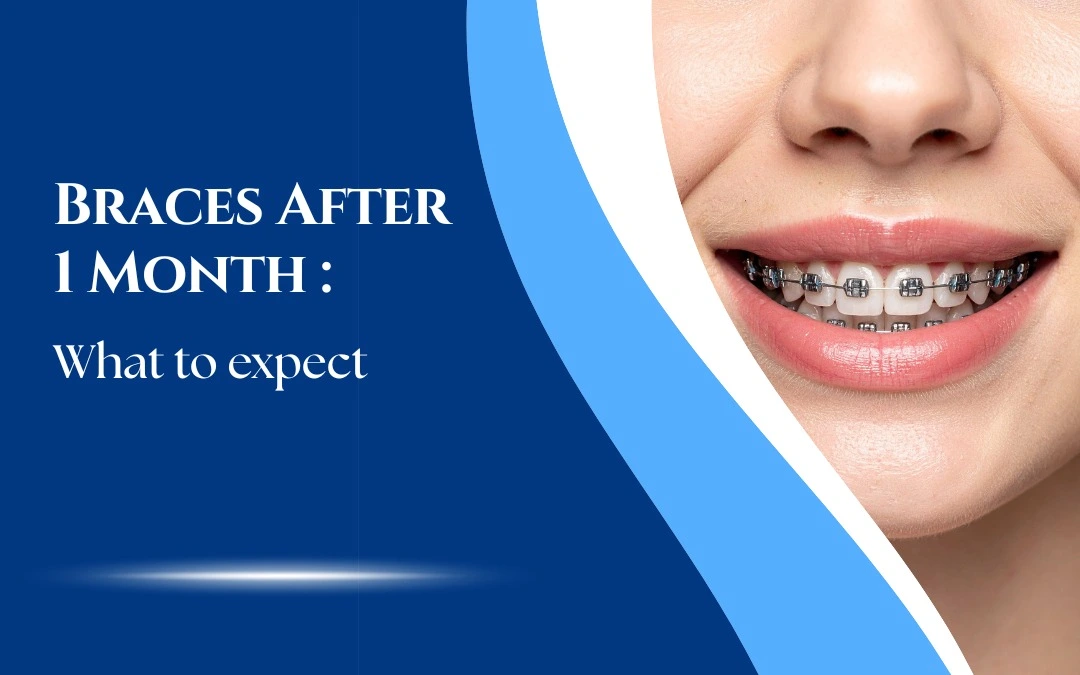
The first month of orthodontic treatment is, undoubtedly, the most unfamiliar stage of the treatment journey. Having orthodontic brackets in your mouth is a new experience, the pressure on your teeth is constant , eating is complicated, and your mouth feels nothing like it used to before braces. . If you are wondering whether any of this is normal, the answer is most certainly yes.
In this guide, Dr. Amol Pradhan from Dental Creations, a trusted dental clinic in Matunga, Mumbai offering orthodontic treatment to patients across Mumbai, answers the most common questions people have after one month of wearing braces.
|
| “The first month is when patients need the most reassurance. Almost everything they are experiencing is expected. Understanding what is normal makes the experience much smoother..” — Dr. Amol Pradhan, BDS | Dental Creations, Matunga |
Is it Normal to Still Feel Pain After 1 Month of Braces?
Yes, and it is one of the most common concerns patients come to us with at the one-month mark. Here’s what you need to know about experiencing pain during the first month of braces.
When braces are first placed, the teeth experience a sustained pressure they have never experienced before. The bone surrounding each tooth responds by gradually remodelling itself to allow movement. This process is not painless, particularly in the beginning. Most patients experience significant soreness in the first three to five days, followed by a gradual reduction in discomfort over the next two to three weeks.
By the end of the first month, the day-to-day discomfort gradually settles. However, when the orthodontist tightens the wire or replaces it with a thicker gauge, the patient experiences soreness again. This is expected and the soreness typically lasts for one to three days before settling down again.
So, is some degree of soreness at the end of the first month normal? Yes. Is severe, unrelenting pain that does not ease after an adjustment normal? No. If the pain is sharp, constant, or does not reduce with painkillers, contact your orthodontist.
| What Is Normal Pain vs What Is Not Normal: Dull ache or tenderness 1 to 3 days after placement or adjustment of braces, soreness when biting, mild jaw fatigue or tenderness while chewing Not Normal: Sharp localised pain that subside, pain that intensifies rather than improves after day 3, or pain accompanied by visible swelling. |
Questions About Your Orthodontic Treatment?
Dr . Amol Pradhan at Dental Creations, Matunga, is here to guide you through every stage. Get in touch if something feels off.
Can Braces Straighten Teeth in 1 Month?

No,not really, but movement of the teeth does begin within the very first few weeks. This is one of the most important things to understand about orthodontic treatment: visible results take months, but the underlying process starts almost immediately.
In the first month, the arch wire begins leveling the teeth to a common plane. You may notice slight movement in individual teeth, particularly if you had significant crowding. Some patients see a gap appear between teeth that were previously overlapping. It means that the crowding of teeth is being resolved and the braces are creating the space required for proper alignment
Achieving a beautiful smile is a gradual process that happens in a series of orthodontic phases.
- Month 1 to 3: Levelling and alignment of teeth . The teeth are moved to a common arch form and initial crowding is addressed.
- Month 3 to 9: Space closure and bite correction. Gaps between the teeth are closed and the relationship between the upper and lower teeth is improved.
- Final months: Small rotations and angulations are corrected to achieve the final result.
Total treatment time depends on the complexity of your case. Mild alignment issues may resolve in 12 to 14 months. More complex cases involving bite correction or significant crowding of teeth typically take 18 to 24 months. Your orthodontist will share the estimated duration of the treatment procedure.
|
| One Month Milestone If you got through the first month, the toughest part is behind you. . The discomfort reduces with each passing month, the diet restrictions are easier to follow , and you will begin to see visible progress from month two or three onwards. |
Why Do Your Teeth Feel Loose During the First Month of Braces?
This is one of the most alarming sensations patients describe, and it is also one of the most misunderstood. Loose-feeling teeth during orthodontic treatment are not a sign that something has gone wrong. It is a sign that the treatment is producing the desired results.
For a tooth to move within the bone, your tooth moves because the bone around it temporarily remodels—it softens on one side and rebuilds on the other. During this remodelling process, the attachment between the tooth root and the surrounding bone is temporarily loosened. The tooth feels mobile because, at a microscopic level, it is mobile. This is the biological mechanism of all orthodontic movement.
What you are experiencing is normal, planned and reversible. . Once the bone remodels around the tooth in its new position, the tooth becomes fully stable again. This process repeats with each small movement throughout treatment.
The looseness typically feels most pronounced in the first few weeks and immediately after adjustment appointments. It does not mean your teeth are falling out. It means your braces are doing what they are designed to do.
|
| When to Be Concerned If a specific tooth feels extremely loose, moves visibly when you press it, or if you notice gum swelling or bleeding around a particular tooth that does not resolve, mention it at your next appointment. This is rare and usually unrelated to the braces treatment themselves. |
Braces Concern That Cannot Wait Until Your Next Appointment?
The orthodontic team is here to support you at every stage of your treatment journey.
What Can You Eat in the First Month With Braces?

Diet is the biggest daily challenge of the first month with braces. There are restrictions, but they are manageable, particularly in an Indian household we are spoiled for choice with various food options.
What You Can Eat
- Soft rice, dal, khichdi, idli, and upma
- Soft chapati torn into small pieces rather than bitten into
- Cooked sabzi, mashed vegetables, and soft paneer
- Curd, yoghurt, buttermilk, and soft desserts like kheer or custard
- Soft-boiled eggs, scrambled eggs, and soft fish
- Soups, smoothies, and cold milk
- Soft fruits like banana, chikoo, mango, and papaya
What to Avoid
- Hard foods: Nuts, raw carrots, hard biscuits, and raw cucumber sticks can break brackets or bend wires.
- Sticky foods: Chewing gum, caramel or jaggery-based sweets, and dried fruit can pull at brackets and get trapped under wires.
- Crunchy foods: Papad, fried snacks, nachos, and hard toast put direct force on brackets.
- Foods you bite into: Corn on the cob, whole apples, and crusty bread should be cut into small pieces before eating, not bitten into directly.
- Sugary and carbonated drinks: These accelerate enamel weakening around brackets and should be minimised throughout treatment.
If a food feels uncertain,cut it into small pieces, chew it slowly, and use your back teeth. If a bracket breaks, call the clinic promptly and get it replaced. A broken bracket means that the tooth is no longer receiving active treatment and it’s not advisable to wait until the next scheduled visit.
How to Manage Pain in the First Month of Braces
Pain management in the first month is largely about being proactive. The soreness is predictable, which means you can plan ahead and be prepared.
Painkillers
Non-steroidal anti-inflammatory drugs as prescribed by your dentist. Make sure you follow the dosage instructions.
Cold and Soft Foods
Cold foods such as chilled yoghurt, cold milk, or chilled fruit provide temporary relief by soothing inflamed gum tissue. In the first few days after placement or adjustment of braces, make cold and soft foods the default rather than the exception.
Orthodontic Wax
If a bracket or wire is rubbing against the inside of your lip or cheek, apply a small piece of orthodontic wax directly over the bracket that is causing irritation. It creates a smooth surface and eliminates friction. This is particularly useful in the first two weeks when the soft tissue has not yet adapted to the hardware.
Warm Salt Water Rinses
Dissolving half a teaspoon of salt in a glass of warm water and rinsing gently once or twice daily helps reduce gum inflammation and keeps the mouth clean. It also soothes any minor abrasions caused by bracket irritation.
Oral Hygiene
Maintaining good oral hygiene helps reduce soreness and lowers the risk of gum inflammation. Food trapped around brackets increases bacterial activity, which worsens gum inflammation and makes soreness more intense. Brush after every meal, use an interdental brush to clean under the arch wire, and rinse with a fluoride mouthwash once daily.
|
| Hygiene Tip From Dental Creations White spot lesions are permanent white marks that develop when plaque remains around brackets for prolonged periods. They are entirely preventable with consistent brushing. Patients who brush after every meal throughout their orthodontic treatment very rarely develop them. |
When Should You Contact Your Dentist During the First Month?
Most discomfort in the first month is manageable at home and resolves on its own. However, there are specific situations where contacting your orthodontist promptly is the right call.
- A bracket has come off: A detached bracket means that the tooth is not receiving active treatment. Contact the clinic immediately and get it fixed. Do not wait until your next scheduled appointment.
- A wire is poking your cheek or lip: Cover the end with orthodontic wax as a temporary measure. If the wax does not help or the wire has shifted significantly out of position, call the clinic.
- Pain is not reducing after three to four days: Soreness after placement or adjustment should begin reducing by day three. Pain that stays constant or worsens beyond this needs to be assessed by the orthodontist.
- Visible swelling around a tooth or in the gum: This is not a normal part of orthodontic soreness and needs to be evaluated. It may indicate a gum issue that is unrelated to the braces treatment.
- You notice significant bite changes: A temporarily altered bite is expected during treatment. However, if you cannot bring your teeth together at all, or if the change feels extreme and worsening, mention it to your dentist.
- Ulcers that do not heal: Minor ulcers from bracket irritation are common in the first few weeks. If an ulcer has not healed even after ten to fourteen days, schedule an appointment with your orthodontist.
At Dental Creations,Matunga, patients undergoing orthodontic treatment are supported throughout the entire treatment period. If something does not feel right, reaching out promptly is always better than waiting.
Conclusion
The first month of braces is definitely the most challenging part of the entire treatment. The soreness is real, the diet requires adjustment, and the loose-tooth sensation can be unsettling. All of this is temporary and is a sign that the treatment is going as planned.
By month two, most patients find that the brackets feel less noticeable, the soreness after adjustments is milder, and eating becomes considerably easier. The visible progress in tooth alignment begins to appear, which makes the effort feel worthwhile.
If you have questions at any point during treatment, the team at Dental Creations in Matunga is always available to help. Orthodontic treatment is a journey, and no question along the way is too small to ask.
FAQ's
How much pain is normal in the first month of braces?
Soreness for the first three to five days after braces are placed is expected, followed by a gradual improvement. After each subsequent adjustment appointment, soreness typically returns for one to three days. This is normal. If the pain is severe enough to disrupt sleep, is not reducing after three to four days, or is accompanied by visible swelling, contact your orthodontist.
Can I see any teeth movement after 1 month of braces?
Some patients notice early movement within the first four to six weeks, particularly if they had significant crowding. Small gaps may appear between teeth that were previously overlapping. This is a good sign. Others see very little visible change at this stage because the early phase focuses on levelling the teeth rather than dramatic repositioning. Visible progress becomes more apparent from month two or three onwards.
Is it safe to eat normally with braces from the first month?
You can eat most foods with braces, but hard, sticky, and crunchy foods should be avoided throughout treatment. In the first month, particularly when teeth are most tender, sticking to soft foods makes eating more comfortable and protects the brackets and wires. Most Indian home-cooked food is well-suited for braces. Cut harder foods into small pieces and chew slowly using the back teeth.
What should I do if a bracket breaks in the first month?
A broken bracket is not an emergency, but it should be repaired within a few days. The tooth with the detached bracket is no longer receiving treatment force, which pauses progress for that tooth. Call Dental Creations and schedule an appointment rather than waiting until your next adjustment. In the meantime, cover the bracket with orthodontic wax if it is causing irritation.
